Blog Archives
Inspiring Lives From Church History: Perpetua, Felicitas and Their Companions a MUST Read account!
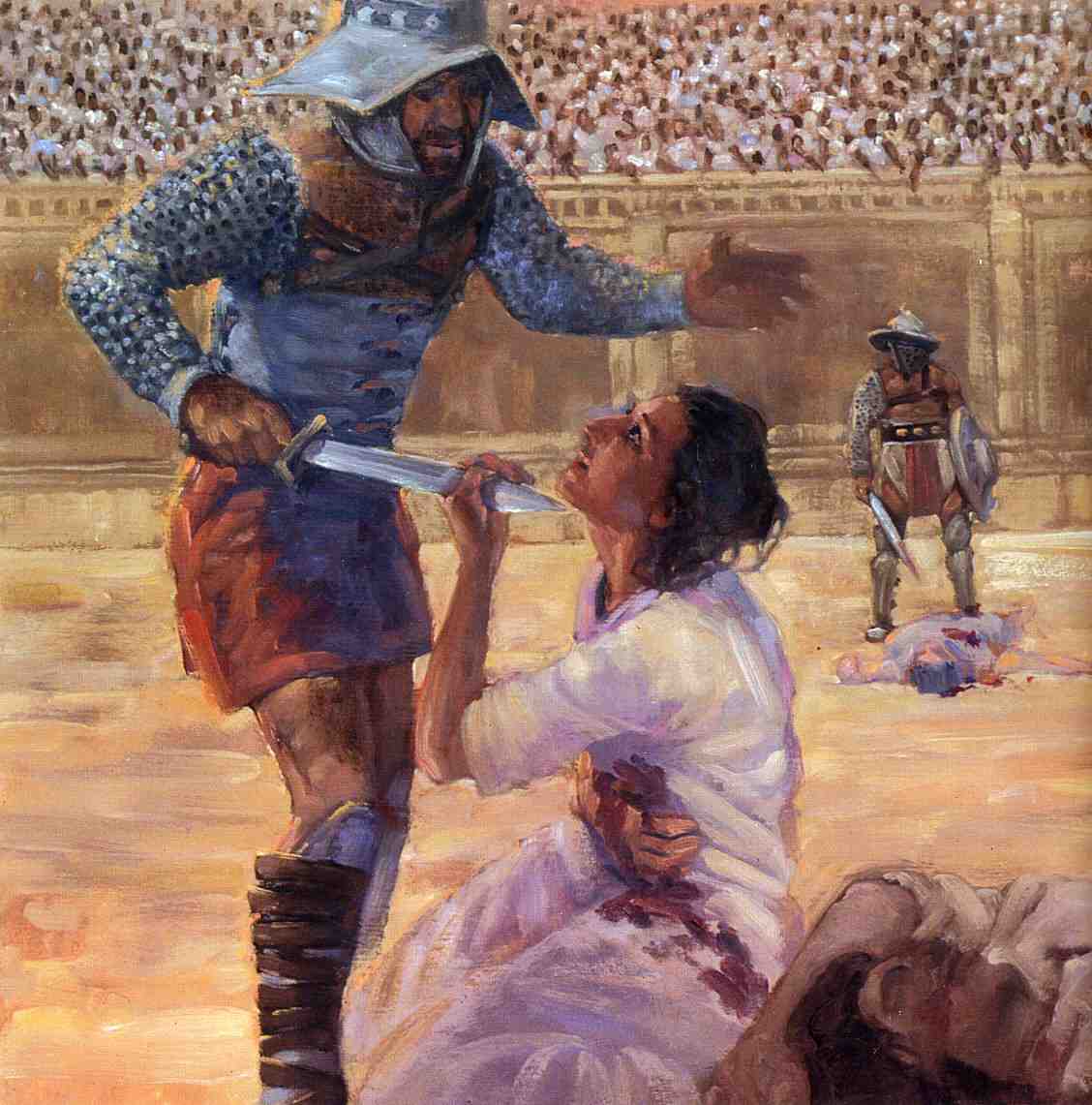 People have been living and dying for Christ for over 2000 years and history is full of wonderful examples of men and women who followed Christ faithfully. We can learn a lot from studying their lives. Yet, there is something truly compelling about those who suffer for Him and pay the ultimate price for their faith.
When I read the historical record of what some of these ancient brothers and sisters went through, it challenges me deeply. I often wonder how I would respond in such situations. I guess we won’t ever know unless and until we find ourselves in the same place. The one thing I can say with certainty is Read the rest of this entry
Is the Casual Approach to Church Producing Casual Christians?
 It is worse than it looks!
It doesn’t matter which study you read about the church, because they all say pretty much the same thing: The church is in decline.
The church is in trouble. I don’t need to read a study to know this. I have observed it over the years in countless churches that I have visited. Churches are weak and though they may have exciting services, they are largely failing to develop strong, grounded and mature Christians. The church at large (there are exceptions, of course) is also failing to impact the lost around her.
The statistics on this are over-whelming and should stop every pastor and leader dead in their tracks so that we immediately fall on our knees to cry out to the Lord “What are we doing wrong?” Sooner or later that will have to happen. Let’s pray it is the former!
Is This Decline the Result of a Flawed Church Model?
I have a theory. It goes something like this: The decline we are seeing in the church is directly related to Read the rest of this entry
The Whole World Stops For 4 Weeks Tomorrow. So Must We
 Every four years, the world effectively shuts down for the greatest sports event on the planet.
What is that event? Most Americans can’t answer that question so we share the answer here:
The World Cup!
That time is upon us, it starts on Thursday.
Not many people know this, but over here at Not For Itching Ears, we are hard core futbol, or soccer fans. We watch every single game. No matter what time the game is on, we watch it. What’s not to like about it? 204 teams compete over a three year period to win an invitation to the World Cup, which happens every 4 years. The host country team gets in free. So there is some great competition.
To make room in our schedule, Not For Itching Ears will be on vacation until the World Cup ends. We have priorities, so we will also be foregoing all yard work. All items on the “Honey Do” List have been temporarily removed. We were supposed to be in Brasil for the games, but alas, we are not!
Soccer is God’s greatest gift for world evangelism. It is an instant conversation starter. Just ask ANY non-American, male or female, who they are rooting for or what they think or their countries chances and you’ll have a 5 – 10 minute conversation about soccer. After that, the rest is up to you.
Our staff is rooting for in this order:
1. The USA and Ecuador (it’s a tie actually) Neither will win, but Ecuador has the best chance of advancing out of their group. Sadly, the USA is in the “Group of Death”
2. Any South American Country
The teams we most want to lose: Ghana, (sorry friends, you have beaten us one to many times) and Mexico. You can’t throw beer bottles at the USA team on their home field in the USA and expect us NOT to despise your team (we love you though!)
Take my advice: Stop blogging for a month and enjoy the World Cup. See you Mid-July! If you don’t know much about it check out this article on the Ten things Non-Soccer Fans Need To Know About the World Cup.
What a Prayer! Not Bad for Being 1600 Years old!
 I often find nourishment for my faith when I read and pray through old prayers. Sure, the church has changed over the years. What it means to follow Christ in a fallen world hasn’t. Those who have faithfully walked the walk before us down through the ages, though gone, can still minister to us. One of the ways this can happen is when we read and prayer the prayers they left behind.
Today, I share with you a 1600 year old prayer from Basil The Great. I have updated it for the modern reader. The Thee’s and Thou’s have been changed.
O God and Lord of the Powers, and Maker of all creation,
Who, because of Your clemency and incomparable mercy,
did send Your Only-Begotten Son and our Lord Jesus Christ for the salvation of mankind,
and with His venerable Cross did tear asunder the record of our sins,
and thereby did conquer the rulers and powers of darkness;receive from us sinful people, O merciful Master, these prayers of gratitude and supplication,
and deliver us from every destructive and gloomy transgression,
and from all visible and invisible enemies who seek to injure us.Nail down our flesh with fear of You,
and let not our hearts be inclined to words or thoughts of evil,
but pierce our souls with Your love, that ever contemplating You, being enlightened by You, and discerning You, the unapproachable and everlasting Light,
we may unceasingly render confession and gratitude to You:The eternal Father,
with Your Only-Begotten Son,
and with Your All-Holy, Gracious, and Life-Giving Spirit,now and ever, and unto ages of ages.
Amen
Why God Might Not Be Concerned About Our Doctrinal Differences
 “Maybe it doesn’t matter to Him?”
I asked, as my friend looked on in utter disbelief at what had just been said. We had been discussing the state of the church in its four major divisions: Catholic, Orthodox, Anglican and Protestant. (For the sake of brevity, I have lumped all us Protestants into one category. I don’t have time to list us all!)
“Of course THE Church matters to God”, he replied, “He died to give it birth!
I can’t argue with that!
What perplexes me though, is that there are so many different types of churches. Clearly a lack of unity within THE church has eluded us. Catholics believe in purgatory, the other three divisions of the church, don’t. That is a pretty significant difference. We can’t all agree on how many books are actually in God’s Holy Word! That also seems significant. Some of the churches teach that how one lives has absolutely nothing to do with one’s salvation, while others teach that it has a lot to do with it, still others are somewhere in-between. Maybe it is just how I think about things, but I would have to say this one is a critical difference of doctrine. We have Catholic decrees calling the Reformers heretics, and we have the Reformers labeling the Pope the anti-Christ. Orthodox and Catholics are at odds over one word in the Creed among other substantial issues. We can’t even seem to agree on the purpose of Christianity.
Then we have us Protestants who agree to disagree!
We agree that Jesus Christ died on the cross for “our” sins, but we can’t agree on who is included in “our”. We believe there is such an important and critical thing as the Atonement, but can’t agree on what it actually entails. We believe that people worked miracles, but can’t seem to agree on when or IF that has stopped. We can’t agree on how a church should conduct itself in worship. We can’t agree on something as simple as how a person actually comes to Christ. We can’t agree on what it means to follow Christ. We don’t agree on a host of important issues.
The world looks at us and sees “Christian” sects that argue amongst themselves and who can’t seem to agree on the essentials. We are divided, pure and simple. Stating otherwise is foolish and wishful thinking.
“Maybe it doesn’t matter to Him?”
Of course, Jesus did pray for “those who would believe in me through their message, that all of them may be one…May they be brought to complete unity to let the world know that you sent me…” (John 17:20-21, 23.) Unity was important enough to pray for on the eve of the crucifixion. It would seem the Father didn’t answer that one in the affirmative. Or am I missing something?
Why would God have allowed that to happen?
Many Protestants believe that around 300AD the real church was infiltrated and perverted by the Catholic Church. As a result, the true Gospel was lost.
If the church is so important to Him, and if the purity of the Gospel and the doctrinal teachings that stem from understanding it correctly matter so much, why didn’t he step in at such a critical moment to stop the hijacking of the Church? Why would God allow the church to embrace a false gospel that would consign its followers to hell? Why didn’t he intervene? Why didn’t he put a quick end to it? I find these questions a bit troubling.
Of Course Catholics believe that the Reformers are the real usurpers. Who can blame them? After all, the church had existed virtually unchanged for 1500 years, until Luther and the young punk come along and want to change the whole thing. It is understandable that they got together at Trent and called the Reformers heretics.
Here’s the compelling issue for me: In both cases, God did not stop the supposed error from taking root. Make no mistake about it; God knew what the result would be of doing nothing to stop these movements. Because of the omniscient nature of God, combined with His foreknowledge, the ensuing doctrinal mess would not have surprised him. He knew it would happen if He did nothing, and he did…. nothing. Think about that!
We do know that if God wanted to step in and crush the rebellions, he could have. He did that very thing during the Exodus when Korah and his crew openly challenged Moses leadership of the young Israel. Read about it in Numbers 16. The gist of it is that God caused the ground to open up and swallow the leaders of the rebellion, their families and everything they owned! Rebellion over. Case closed. God’s leadership of his people settled.
But that is not what he did in 300AD. That is not what he did when the West and East Split. It is not what he did at the beginning of the Reformation. In all three cases, God allowed it to stand. In all three instances, The Father had the opportunity to answer the Son’s prayer for unity, but chose not to. Even when, in the case of the Reformers, God knew that a Pandora’s Box of doctrinal disunity would surely result if He did not act. Still, he refrained.
This brings me back to my conversation with my friend. Most assuredly, the doctrinal differences we have killed others for matter to us. They are a big deal. But do they matter to God?
Before you get the kindling and light the match to burn me alive at the stake for the heretic that I am, realize that I am not saying that God does not care about the Gospel or the church. That is not what I am saying at all. Actually, I don’t know what to think about all this. This is a conversation I have been having, largely in my own mind, for quite some time. I thought I would put it out there for others to interact with and see how you might approach the topic.
Why do you think God did nothing to stop any of these movements?
Read another thought provoking post on worship: God Does Not Need Our Worship…We Need It!
Two Different Views of Salvation: Protestant vs Orthodox – Which Makes More Sense to You?
If you are like me, you might not even know what the Orthodox Church is!
The Orthodox view salvation and the purpose of mankind through a different lens than most Protestants do. In this short video, you will see a very accurate portrayal of mainstream protestant soteriology which you will recognize immediately. You will also be introduced to the Orthodox view.
After you watch it, come back and share your thoughts about the video. Which view best represents the Gospel in your opinion?
Discover The Early Church – “We Don’t Speak Great Things – We Live Them!
 Easy to read.
Hard to put down.
Inspiring.
Informative.
Effortless introduction into the writings of the early church.
Download it and start reading it today for less than $6 on Amazon
“We Don’t Speak Great Things – We Live Them” is a must read book for every Christian. It contains two early church writings: Justin Martyrs First Apology and Octavius, written by Mark Felix.
If you want an introduction into how the early church thought about Jesus, Salvation, predestination, communion and life after death, and how they lived out the faith, this is the easiest introduction I know. Thanks to the modern translation, the works practically read themselves.
Next to the Bible, the early Christian writings are the most valuable documents of Christianity. They teach us what the church was like immediately after the events recorded in the New Testament. What a rich resource they are. Yet, for many followers of Christ , they remain a mystery. You know all about the history of the United States and how it started. You probably know a lot about how your own denomination began or at least how the Reformation started. Shouldn’t we all be familiar with how Christianity grew in the first and second century?
Don’t stay in the dark. Read this book: “We Don’t Speak Great Things – We Live Them”
When a second-century pagan ridiculed Christians for their lack of education, one Christian replied, “We don’t speak great things we live them!” That was the essence of early Christianity. It was not a Christianity of words, but rather of holy, obedient living.
This book contains two second-century Christian works, translated into readable contemporary English: Mark Felix’s Octavius and Justin Martyr’s First Apology. They describe the dynamic, living church of the second century and discuss what Christians of that age believed.
The First Apology of Justin Martyr is the oldest Christian apology still in existence in its entirety. Justin penned this work at the risk of his own life. Apart from the inspired New Testament writings, this apology is perhaps the single most valuable work of early Christianity. Through it, we can take a peek through time to see what Christianity was like at the close of the apostolic age. For example, Justin takes us on a tour of a Christian baptism and a typical Sunday morning church service. He lets us know what Christians in his age believed about Jesus, salvation, predestination, communion, and life after death.
Octavius, written by a Christian lawyer named Mark Felix, takes a look at Christianity from both the pagan and Christian view points. It’s not only one of the most readable early Christian works, but it’s also a true work of literature. Felix writes in a graceful style that rivals that of Cicero, and his defense of Christianity is truly inspiring. In the end, Octavius is more than a challenge to the pagan Romans it’s a challenge to the twentieth century church as well.
“We Don’t Speak Great Things – We Live Them” Justin Martyr and Mark Felix
Worship: Why Your Church Is Failing And What You Can Do About It
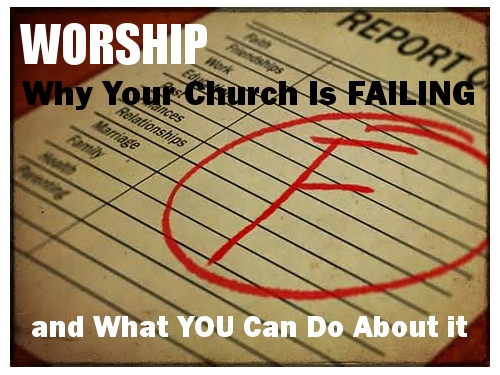 From my view in the cheap seats, it seems that what it means to worship God has become open to interpretation.
Can I worship God any way I want to?
Does church leadership have biblical authority to design a worship service anyway they think is best?
Judging by the state of worship in the American Evangelical church, the answer is Yes to both questions. And boy do we ever take this permission seriously!
It would appear that Read the rest of this entry
How The Early Church Spotted a False Prophet…Your Answer to Our Poll
 How is your Early Church History?
Last week we posted a poll called “Do You Know How The Early Church (pre 150AD) Spotted A False Prophet” (Take the poll!) In it, we gave respondents 5 answers to choose from and only one choice was correct. It is important to note that this poll did not include all the ways the early church spotted a false prophet. Also, the one correct choice was taken from the Didache, a respected early church document written sometime between 50AD and 150AD. Do you know the right answer? Let us look at them one at a time:
5. They Believed The Gifts of The Spirit Had Not Ceased. FALSE! 6% of respondents identified this as the correct answer.
4. They Taught That There Were Two Ways Only: The Way of Life or The Way of Death: FALSE, and almost 13% of respondents chose this as the answer,
3. They Taught that People had Free Will and Could Choose to Follow Christ. FALSE! 13% of those polled chose this as the correct answer which would be a popular answer for followers of Calvin.
2. They Taught that Water Baptism Could be Done Without Immersion, FALSE! It is not surprising that this answer was chosen by 19% of those who took the poll. However, the early church did not make as big a deal about this as modern day Protestants. They preferred immersion in running water, but allowed pouring water over the head if running water was not available.
Fifty percent of respondents chose the correct answer. So, how did the church spot a false prophet? Drum roll pleeeeeease!
1. They Asked For Money!
“Now concerning the apostles and prophets, deal with them as follows in accordance with the rule of the gospel. Let every apostle who comes to you be welcomed as if he were the Lord. But he is not to stay for more than one day, unless there is need, in which case he may stay another. But if he stays three days, he is a false prophet. And when the apostle leaves, he is to take nothing except bread until he finds his next nights lodging. But if he asks for money, he is a false prophet. Didache 11:3-6
Think about this. If they asked for money, they were to be considered false prophets. Why do you think the early church used this as part of the criteria? Just as importantly, why do we not use this criteria today and if we did, how would things change?
BONUS: Here’s another way the Didache instructed believers to recognize wolves in sheep’s clothing: They did not practice what they preached!
“If any prophet teaches the truth, yet does not practice what he teaches, he is a false prophet.” Didache 11:10
Do You Know How The Early Church (Pre-150AD) Spotted a False Prophet?
Test your knowledge of early church history in our latest poll.
There are 5 answers to choose from. Only one is correct, based on the “Teaching of the Lord to the Gentles by the Twelve Apostles” or what is more commonly called the “Didache” and other early church writings. The Didache is a well received document from the early church. The date of its writing is hard to determine, but most scholars put it somewhere between 50 AD and 150 AD, very close to the time of the Apostles. It is not part of the Bible, but it is a very good document to read if you want to learn how the early church understood the teaching of Christ and the Apostles.
Can you identify the correct answer? There is only one correct answer in our poll, but that does not mean there were not other indicators. There is only one correct answer in this poll.
So, how did the church identify a false prophet in the 2nd century?
Take the poll and then go here for the answer
It’s Official: People Don’t Want To Sing So Much On Sundays.
Inspiring Lives From Church History: James, the Great Martyr of Persia
 People have been living and dying for Christ for over 2000 years and history is full of wonderful examples of men and women who followed Christ faithfully. We can learn a lot from studying their lives. Yet, there is something truly compelling about those who suffer for Him and pay the ultimate price for their faith.
When I read the historical record of what some of these ancient brothers and sisters went through, it challenges me deeply. I often wonder how I would respond in such situations. I guess we won’t ever know unless and until we find ourselves in the same place. The one thing I can say with certainty is Read the rest of this entry
The Church…Who Is Closer To The Truth?
 Today’s poll is at once both easy and difficult. There are only three real answers. That’s the easy part. The hard part? Choosing the right answer. In our opinion, that takes a little thinking. Here’s what we are asking you: Which church tradition, in your opinion, (Catholic, Orthodox or Protestant) is most faithful to the historic Christian faith of the early church (the first 300 years)?
Easy now my fellow Protestants! Don’t jump to what may appear to be an obvious answer. Why, you ask? because we have lumped all protestant groups into one answer. This group included Baptists, Reformed, Charismatics, Pentecostals, Lutherans, non-denominational, Methodists, Episcopalians, Presbyterians, The Faith movements, Nazarene, COGIC etc. Even though the Anglicans are not really part of the official Protestant movement, we have included them here as well. So, it is not simply whatever protestant group you are a part of, which of course is the MOST faithful, that’s why you are a part of it. It’s the whole thing.
Further, we are not asking which tradition is most faithful to Luther or Calvin or the other Protestant trailblazers. The criterion is which group is more faithful to the version of Christianity that the early church embraced and took all over the world in the first 300 years of church history? Another way of looking at is to ask Which church tradition would the Apostles and the early church Fathers recognize as being most representative of the church they gave their lives to lead and strengthen?
So who has remained most faithful to the Early Church: The Protestants as a group, The Catholic Church or the Orthodox Church?
Take our other polls: What Do You Like MOST about the Church Service and What Do You Like LEAST about The Church Service? and too really make your opinion count for an upcoming post tell us Do You Think We spend Too Much Time Singing in Church?
Inspiring Lives From Church History: Hesychius 300AD
 People have been living and dying for Christ for over 2000 years and history is full of wonderful examples of men and women who followed Christ faithfully. We can learn a lot from studying their lives. Yet, there is something truly compelling about those who suffer for Him and pay the ultimate price for their faith.
When I read the historical record of what some of these ancient brothers and sisters went through, it challenges me deeply. I often wonder how I would respond in such situations. I guess we won’t ever know unless and until we find ourselves in the same place. The one thing I can say with certainty is that Read the rest of this entry
Inspiring Lives From Church History
People have been living and dying for Christ for over 2000 years and history is full of wonderful examples of men and women who followed Christ faithfully. We can learn a lot from studying their lives. Yet, there is something truly compelling about those who suffer for Him and pay the ultimate price for their faith.
When I read the historical record of what some of these ancient brothers and sisters went through, it challenges me deeply. I often wonder how I would respond in such situations. I guess we won’t ever know unless and until we find ourselves in the same place. The one thing I can say with certainty is that these accounts inspire me to live for Christ. That is why today, we are beginning a new series. In it, we will highlight men and women who suffered for Christ, because of their faith. They won’t be long posts, so you should be able to read them in less than 5 minutes. My Prayer is that they will cause you to reflect on your own life and faith, inspiring you follow Him more deeply.
Today, we will read about Mark, the Bishop of Arethusa (361 AD)
Mark, Bishop of Arethusa, suffered for his faith in Christ under the emperor Julian the Apostate (361-363). By order of the emperor Constantine, St Mark had once destroyed a pagan temple and built a Christian church.
When Julian came to the throne, he persecuted Christians and tried to Read the rest of this entry

Don Francisco’s “He’s Alive” Live Video
This song, was a big hit back in the day. Every time I ever heard it, it moved me! I still does today. Check out the live video of Don Francisco’s “He’s Alive” below. I hope it encourages you this Easter weekend.
Jim
A Must Read Book For Worship Leaders and Pastors: Discover The Mystery of Faith
 NotForItchingEars.com was born out of my utter frustration with, and sincere love for, the evangelical church. Having visited congregation after congregation and reading many studies, I knew something was wrong.
I spent a considerable amount of time pleading with the pastors and leaders of the church at large to come back to the ancient path. I challenged many worship leaders to re-think the worship services they led.
The response of many in the worship leading community was less than enthusiastic. Most people just wanted me to Read the rest of this entry
Christian Bloggers of the World…We Need Your Help!
 I have a hunch, a hypothesis, a gut feeling. That is, that singing in church is not as important to most of us who attend regularly. We don’t dislike singing, and are not theologically opposed to it. However, most of us, I propose, don’t give it as much weight as our worship leaders or senior leadership do.
That has been what I have observed in congregation after congregation that I have visited in the past 4 years. These polls are an unscientific way of trying to get a more objective view. The answers to some of these polls has been rather eye-opening, and seem to confirm my gut feelings. I will be spending time writing about what I have learned as a result in the not too distant future.
I need more answers to these questions, and so I am putting a link to our polls in this post. Please feel free to use them in your own blog posts. The results are available for all to see, and you can use the gathered information for any observations you would like to make. The more votes we get, the better understanding we will have.
So here are the links:
What Are the Two LEAST Important Elements of Corporate Worship for YOU Personally? http://poll.fm/45vog
Do You Think We Spend Too Much Time Singing In Church? http://poll.fm/45rag
What Would You Do If Your Church Eliminated Singing from the Service? http://poll.fm/31app
What is the Most Important Element of Corporate Worship for You Personally? http://poll.fm/2hazg
What one thing would you like to see changed in the American Church? http://poll.fm/2ga0u
Dead People Speak To Me
 Dead people speak to me. It’s true, they really do!
Don’t misunderstand me, it’s not that the dead visit me in my sleep, or that I hear voices in my head. I am talking about the writings of the early church leaders, those great men of God who passed from this earth 1700-1900 years ago. Their writings speak volumes to me about what it means to Read the rest of this entry






 Not For Itching Ears