

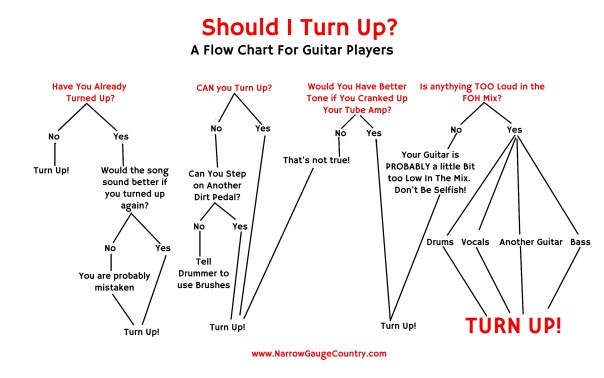
We always knew it, now we have proof!
Enjoy this satirical look at modern worship lyrics. Song writers were challenged to write a worship song using the name of Soap Opera’s as their dominant lyrics. Hilarious, and surprisingly similar to the typical worship song being written and sung in churches across the USA.
If you are like me, you might not even know what the Orthodox Church is!
The Orthodox view salvation and the purpose of mankind through a different lens than most Protestants do. In this short video, you will see a very accurate portrayal of mainstream protestant soteriology which you will recognize immediately. You will also be introduced to the Orthodox view.
After you watch it, come back and share your thoughts about the video. Which view best represents the Gospel in your opinion?
 Easy to read.
Hard to put down.
Inspiring.
Informative.
Effortless introduction into the writings of the early church.
Download it and start reading it today for less than $6 on Amazon
“We Don’t Speak Great Things – We Live Them” is a must read book for every Christian. It contains two early church writings: Justin Martyrs First Apology and Octavius, written by Mark Felix.
If you want an introduction into how the early church thought about Jesus, Salvation, predestination, communion and life after death, and how they lived out the faith, this is the easiest introduction I know. Thanks to the modern translation, the works practically read themselves.
Next to the Bible, the early Christian writings are the most valuable documents of Christianity. They teach us what the church was like immediately after the events recorded in the New Testament. What a rich resource they are. Yet, for many followers of Christ , they remain a mystery. You know all about the history of the United States and how it started. You probably know a lot about how your own denomination began or at least how the Reformation started. Shouldn’t we all be familiar with how Christianity grew in the first and second century?
Don’t stay in the dark. Read this book: “We Don’t Speak Great Things – We Live Them”
When a second-century pagan ridiculed Christians for their lack of education, one Christian replied, “We don’t speak great things we live them!” That was the essence of early Christianity. It was not a Christianity of words, but rather of holy, obedient living.
This book contains two second-century Christian works, translated into readable contemporary English: Mark Felix’s Octavius and Justin Martyr’s First Apology. They describe the dynamic, living church of the second century and discuss what Christians of that age believed.
The First Apology of Justin Martyr is the oldest Christian apology still in existence in its entirety. Justin penned this work at the risk of his own life. Apart from the inspired New Testament writings, this apology is perhaps the single most valuable work of early Christianity. Through it, we can take a peek through time to see what Christianity was like at the close of the apostolic age. For example, Justin takes us on a tour of a Christian baptism and a typical Sunday morning church service. He lets us know what Christians in his age believed about Jesus, salvation, predestination, communion, and life after death.
Octavius, written by a Christian lawyer named Mark Felix, takes a look at Christianity from both the pagan and Christian view points. It’s not only one of the most readable early Christian works, but it’s also a true work of literature. Felix writes in a graceful style that rivals that of Cicero, and his defense of Christianity is truly inspiring. In the end, Octavius is more than a challenge to the pagan Romans it’s a challenge to the twentieth century church as well.
“We Don’t Speak Great Things – We Live Them” Justin Martyr and Mark Felix
 “If it feels good, do it!”
This has been one of our favorite slogans since the 1960’s. It seems that the American church has adopted a similar pragmatic view for church: “If it makes people come to church, we should do it.” Today, church leaders of every persuasion are willing to try anything if it works in drawing more people into their services. If it “works” then it must be fine and stamped with the approval of God Himself.
I can hear you now saying “Of course this is true! Why on earth wouldn’t it be?”
Because it wasn’t!
 From my view in the cheap seats, it seems that what it means to worship God has become open to interpretation.
Can I worship God any way I want to?
Does church leadership have biblical authority to design a worship service anyway they think is best?
Judging by the state of worship in the American Evangelical church, the answer is Yes to both questions. And boy do we ever take this permission seriously!
It would appear that Read the rest of this entry
 Top 10 Reasons You Should Visit Our Church This Sunday
#10 We have the best worship team in town filled with young, uber-talented musicians and singers.
#9 Our worship team recently recorded a cutting edge worship CD (You can buy it for $13).
#8 We have state of the art sound and lighting systems that allow you to hear and feel the worship, as well as experience worship in a way you can’t at other local churches.
#7 Worshipping in song is the best and highest form of corporate worship. We do it with excellence and we do it a lot! If you like music, you are going to love our worship!
#6 Come as you are. You can wear whatever you feel comfortable in. People wear everything from business casual to jeans and T-shirts
#5 We have GREAT coffee drinks (for sale) and you can bring the drinks with you into the auditorium.
#4 We have free wi-fi available throughout our facility and it is available at all times
#3 Our services are short! Each of our 3 services is only 70 minutes long
#2 Our pastor is an incredibly gifted speaker who is VERY funny. Each week you will hear a short inspirational talk based on our pastors life experience or the experience of others that is always relevant to your life. There is usually a Bible verse or two sprinkled throughout the talk to help inspire you to live your life to the fullest.
#1 Our services are FUN! We have eliminated the old school, boring liturgical stuff from our worship which many of the other churches in town still utilize. We won’t ask you to stand or sit or kneel. There are no corporate readings or corporate prayers or communion. Just cutting edge worship and inspirational words.
What’s missing?
I have compiled these “reasons” from church websites and church advertising in my area. Before you write to correct me, realize that this post is a joke. The sad part about it is that they are real reasons that actual churches have given. Well, I have added my special touch to the reasons. Nevertheless, the gist of them is spot on.
Some will object to the competitive nature of the post. The “Our Church is Better Than the Rest” idea is abhorrent, I agree. However, that idea is rampant in our church advertising. It is sometimes subtle, sometimes over the top, but often present for anyone to see. At least I see it.
Some will see nothing wrong in the Top 10 Reasons I have listed. Others, will be able to spot what is missing easily. Still others, will have to look harder until they see what is missing. Feel free to throw daggers, share thoughts or comment as you see fit!
Thanks for visiting us here at http://www.NotForItchingEars.com
 How is your Early Church History?
Last week we posted a poll called “Do You Know How The Early Church (pre 150AD) Spotted A False Prophet” (Take the poll!) In it, we gave respondents 5 answers to choose from and only one choice was correct. It is important to note that this poll did not include all the ways the early church spotted a false prophet. Also, the one correct choice was taken from the Didache, a respected early church document written sometime between 50AD and 150AD. Do you know the right answer? Let us look at them one at a time:
5. They Believed The Gifts of The Spirit Had Not Ceased. FALSE! 6% of respondents identified this as the correct answer.
4. They Taught That There Were Two Ways Only: The Way of Life or The Way of Death: FALSE, and almost 13% of respondents chose this as the answer,
3. They Taught that People had Free Will and Could Choose to Follow Christ. FALSE! 13% of those polled chose this as the correct answer which would be a popular answer for followers of Calvin.
2. They Taught that Water Baptism Could be Done Without Immersion, FALSE! It is not surprising that this answer was chosen by 19% of those who took the poll. However, the early church did not make as big a deal about this as modern day Protestants. They preferred immersion in running water, but allowed pouring water over the head if running water was not available.
Fifty percent of respondents chose the correct answer. So, how did the church spot a false prophet? Drum roll pleeeeeease!
1. They Asked For Money!
“Now concerning the apostles and prophets, deal with them as follows in accordance with the rule of the gospel. Let every apostle who comes to you be welcomed as if he were the Lord. But he is not to stay for more than one day, unless there is need, in which case he may stay another. But if he stays three days, he is a false prophet. And when the apostle leaves, he is to take nothing except bread until he finds his next nights lodging. But if he asks for money, he is a false prophet. Didache 11:3-6
Think about this. If they asked for money, they were to be considered false prophets. Why do you think the early church used this as part of the criteria? Just as importantly, why do we not use this criteria today and if we did, how would things change?
BONUS: Here’s another way the Didache instructed believers to recognize wolves in sheep’s clothing: They did not practice what they preached!
“If any prophet teaches the truth, yet does not practice what he teaches, he is a false prophet.” Didache 11:10
 Justin writing around 160 AD describes the early church’s view on free will in his First Apology chapter 43 and 44. It seems to be diametrically opposed to what Calvin taught on the subject. Hmmm, could Calvin be wrong?
But lest some suppose, from what has been said by us, that we say that whatever happens, happens by a fatal necessity, because it is foretold as known beforehand, this too we explain. We have learned from the prophets, and we hold it to be true, that punishments, and chastisements, and good rewards, are rendered according to the merit of each man’s actions. Since if it be not so, but all things happen by fate, neither is anything at all in our own power. For if it be fated that this man, e.g., be good, and this other evil, neither is the former meritorious nor the latter to be blamed. And again, unless the human race has the power of avoiding evil and choosing good by free choice, they are not accountable for their actions, of whatever kind they be. But that it is by free choice they both walk uprightly and stumble, we thus demonstrate. …
But this we assert is inevitable fate, that they who choose the good have worthy rewards, and they who choose the opposite have their merited awards. For not like other things, as trees and quadrupeds, which cannot act by choice, did God make man: for neither would he be worthy of reward or praise did he not of himself choose the good, but were created for this end; nor, if he were evil, would he be worthy of punishment, not being evil of himself, but being able to be nothing else than what he was made.
Breaking: Church Service in 2nd Century Revealed
Test your knowledge of early church history in our latest poll.
There are 5 answers to choose from. Only one is correct, based on the “Teaching of the Lord to the Gentles by the Twelve Apostles” or what is more commonly called the “Didache” and other early church writings. The Didache is a well received document from the early church. The date of its writing is hard to determine, but most scholars put it somewhere between 50 AD and 150 AD, very close to the time of the Apostles. It is not part of the Bible, but it is a very good document to read if you want to learn how the early church understood the teaching of Christ and the Apostles.
Can you identify the correct answer? There is only one correct answer in our poll, but that does not mean there were not other indicators. There is only one correct answer in this poll.
So, how did the church identify a false prophet in the 2nd century?
Take the poll and then go here for the answer
It’s Official: People Don’t Want To Sing So Much On Sundays.
 I’ve never heard of this translation before and I don’t think it is correct. It does seem to accurately reflect the direction of the church in the USA though. Here’s a quote of Acts 2:42-45 from the New Testament For Today’s Christianity. Check the Greek and you decide. Read the rest of this entry
 “Whatever Works!”
That is the take many younger pastors have on Paul’s “I have become all things to all men…” mission strategy. Now, we take it to the next level.
It is always a challenge to get men to attend church. They just don’t want to come. They see it as a complete waste of their precious time. Yet, somehow we must reach them. I absolutely believe THAT! But how to do it? Perhaps a little creativity is in order. So, if you don’t mind thinking waaaaay outside the box, or care about church history or any parameters the Scriptures might lay out, try these pragmatic suggestions. Several studies suggest that this new approach will pack the house. Read the rest of this entry
 When I was a new worship leader, I prepared like crazy for Wednesday nights and Sunday Mornings! I made sure the music charts were written out and CORRECT and that everyone had the one they needed. I would play through the songs multiple times on my own and work on any tough parts. I would create interesting modulation changes! This was all before we even rehearsed the team. Probably like most worship leaders, I took it seriously and prepared everything.
Except for any prayers!
Prayer was the one thing I didn’t need to think about ahead of time. I could always pray in front of others. I had no fear of it, loved doing it, and could make it up on the fly. I was good at it. Or so I thought.
Then one day, it happened.
I listened to several of my preaching tapes, and I was horrified at Read the rest of this entry
 “We sing too much in church!”
Whenever I say this, those who hear me have one of two responses. The first one is absolute total agreement, usually told to me via a whisper in the ear or a hand written note that self destructs after I have read it. There can be NO evidence of this solidarity.
The second response is a casual search for matches, wood and rope so I can be burned alive at the stake as a heretic. OK, so I am exaggerating a little bit about the first response, people don’t actually pass me a note that self destructs, but you get the idea!
If you have spend any amount of time on Not For Itching Ears, then you are aware of our thoughts on corporate worship and the need to reform it. We thought it would be a good idea to create some polls about various aspects of corporate church life, and see what readers thought. So, we created several of them. The results are still coming in, but so far Read the rest of this entry
 “Do we really need another one?” I asked with an annoying tone. I must have been bothered by it, because I asked my passenger Dakota her thoughts on the subject. Dakota is my Golden Retriever, and from what I could tell she was all for it, as long as they gave away tennis balls to all visitors.
In my town, it would seem there is a new church starting every couple of weeks. I understand the idea behind planting a new church. It is suppose to be the most effective form of evangelism known to mankind. At least that is what I was told in seminary, and it would seem our young leaders are being indoctrinated with the same idea. But is it true?
I think the greatest form of evangelism is one on one. More people are still introduced to God and Jesus Christ via interaction with people outside the congregational walls. Period.
Church planting certainly has its place. Is it possible to over plant the church? Can there be too many churches in a city? If you are considering planting a church where the church already exists in abundance, it would be wise of you to thoughtfully and unselfishly pondered that question. I think the answer is a resounding YES! Take a look at Colorado Springs, CO. Do you think it needs one more evangelical congregation? The red dots are churches.

Over church planting in a city can cause a stumbling block for evangelism. So many different churches can lead non-christians to believe that even Christians can’t figure this stuff about ultimate issues out. I can imagine the questions that arise in the mind of the non-Christians: “Why are there so many churches if the claims of Christianity are true? Isn’t the fact that there are so many different churches PROOF that Christianity is false? Why are they starting another one? Why do they all believe different things? If they can’t agree on what the truth is, maybe they are all just a bunch of misguided, well-meaning people who I should not take seriously.”
We won’t even talk about how one more church plant will dilute the scarce resources of leaders, servants, and dinero.
I applaud you for wanting to step out in faith and make a real difference in people’s lives. Still, I want to issue a challenge to if you are thinking about planting a church. If God is calling you to a particular area that is church saturated, perhaps it is NOT to plant your own church. Perhaps you are being called to come alongside someone else. Here’s an idea: If God has called you to come to a city where there are hundreds of churches, why not find a job like Paul did and the rest of us do. Why not volunteer to help another local church like the rest of us? Why start something new?
Be honest with yourself, isn’t what you are thinking about starting exactly the same thing as the last 35 guys who came here to start something? Does God really need 36 congregations that are essentially the same thing? Perhaps it would honor God more and make a bigger impact on the community if you went and helpedp the last guy God sent here. They don’t have enough money to pay you, but they need your help. Just a thought.
Want to be challenged more or get more upset? Read our post “Would The Apostle Paul Plant a Seeker-Sensitive Purpose Driven Church?
Check out the result of 4 different polls and the challenging conclusions arrived at in our post It’s Official: People Don’t Want To Sing So Much On Sundays.
We always knew it, now we have proof!
 People have been living and dying for Christ for over 2000 years and history is full of wonderful examples of men and women who followed Christ faithfully. We can learn a lot from studying their lives. Yet, there is something truly compelling about those who suffer for Him and pay the ultimate price for their faith.
When I read the historical record of what some of these ancient brothers and sisters went through, it challenges me deeply. I often wonder how I would respond in such situations. I guess we won’t ever know unless and until we find ourselves in the same place. The one thing I can say with certainty is Read the rest of this entry
 It is a simple question, really…
In your opinion, is God most concerned with character or accomplishments in our lives? In other words, does He care more about the great things we accomplish (or don’t) in his name and for his kingdom OR who we ARE or BECOMING as his followers. In this poll, you can’t say “both” because the question is which one does he car MOST about?
I feel like I need to get something off my chest. It bothers me that Christians continually express shock, disapproval and judgment at the way non-Christians live.
You’ve seen it, and maybe even done it:
Doesn’t anyone believe in marriage anymore?
I can’t get over how many people today smoke weed.
Can you believe they just sleep in instead of coming to church?
Did you hear they moved in together? That’s so bad!
What’s wrong with our government? Why don’t they uphold biblical values?
Whenever I hear that, I feel like saying “Do you seriously expect non-Christians to behave like Christians?”
This article was not written by us over here at NotForItchingEars.com. I found it over at www.Careynieuwhof.com. You can read the article on Carey’s site here: http://careynieuwhof.com/2013/02/why-christians-should-let-non-christians-off-the-moral-hook/ I think he makes some great points in this article, and I thought it was worth reposting. So here it is:
Think it through.
Most people in the West no longer consider themselves Christian.
Or even if they use the term “Christian” to describe themselves, few believe in the authority of scripture or profess a personal faith in Jesus Christ.
So why would we expect them to behave like Christians? Why would we expect people who don’t profess to be Christians to:
Wait until marriage to have sex?
Clean up their language?
Be celibate when they’re attracted to people of the same sex?
Pass laws like the entire nation was Christian?
Seriously? Why?
They’re not pretending to be Christians. Why would they adopt Christian values or morals?
Please don’t get me wrong.
I’m a pastor. I completely believe that the Jesus is not only the Way, but that God’s way is the best way.
When you follow biblical teachings about how to live life, your life simply goes better. It just does. I 100% agree.
I do everything I personally can to align my life with the teachings of scripture, and I’m passionate about helping every follower of Christ do the same.
But what’s the logic behind judging people who don’t follow Jesus for behaving like people who don’t follow Jesus?
Why would you hold the world to the same standard you hold the church?
Before you judge a non-Christian for behaving like a non-Christian, think about this:
1. They act more consistently with their value system than you do. It’s difficult for a non-Christian to be a hypocrite, because they tend to live out what they believe. Chances are they are better at living out their values than you or I are. Jesus never blamed pagans for acting like pagans. But he did speak out against religious people for acting hypocritically.
2. Your disapproval is destroying the relationship (if you have even have a relationship in the first place). Some of the most judgmental Christians have zero non-Christians friends. Is that a surprise, really? I mean, on a human level, how many people have you made time for this week that you know disapprove of who you are and the way you live? Exactly.
3. Judgment is a terrible evangelism strategy. People don’t line up to be judged. If you want to keep being ineffective at reaching unchurched people, keep judging them.
4. Judging outsiders is unChristian. Paul told us to stop judging people outside the church. Jesus said God will judge us by the same standard with which we judge others. Paul also reminds us to drop the uppity-attitude; that none of us were saved by the good we did but by grace.
So what can you do?
1. Stop judging non-Christians. Start loving them. Very few people have been judged into life-change. Many have been loved into it.
2. Empathize with non-Christians. Ask yourself, “If I wasn’t a Christian, what would I be doing?” Chances are you might be doing exactly what the non Christians in your neighbourhood are doing. Understanding that and empathizing with that completely changes how you see people. And they can tell how you see them.
3. Hang out with non-Christians. Jesus did. And caught plenty of disapproval for it. I have a friend who continually drops f-bombs in my presence. As much as it bothers me, I never correct him (he’s not a kid, he’s my peer). But I do pray for him every day and we talk about my faith. I pray I see the day when he’s baptized.
4. Pray for unchurched people. It is impossible to remain enemies with someone you genuinely pray for daily.
5. Live out your faith authentically. Your actions carry weight. Humility is far more attractive than pride. When a non-Christian sees integrity, it’s compelling.
I just have a feeling if we in the church loved the world the way Jesus did, the world might come running to Christ.
And, then, the change we long to see might actually begin to happen.
Visit Carey’s site for more of his take on Church life and Christianity: http://careynieuwhof.com/
 Today’s poll is at once both easy and difficult. There are only three real answers. That’s the easy part. The hard part? Choosing the right answer. In our opinion, that takes a little thinking. Here’s what we are asking you: Which church tradition, in your opinion, (Catholic, Orthodox or Protestant) is most faithful to the historic Christian faith of the early church (the first 300 years)?
Easy now my fellow Protestants! Don’t jump to what may appear to be an obvious answer. Why, you ask? because we have lumped all protestant groups into one answer. This group included Baptists, Reformed, Charismatics, Pentecostals, Lutherans, non-denominational, Methodists, Episcopalians, Presbyterians, The Faith movements, Nazarene, COGIC etc. Even though the Anglicans are not really part of the official Protestant movement, we have included them here as well. So, it is not simply whatever protestant group you are a part of, which of course is the MOST faithful, that’s why you are a part of it. It’s the whole thing.
Further, we are not asking which tradition is most faithful to Luther or Calvin or the other Protestant trailblazers. The criterion is which group is more faithful to the version of Christianity that the early church embraced and took all over the world in the first 300 years of church history? Another way of looking at is to ask Which church tradition would the Apostles and the early church Fathers recognize as being most representative of the church they gave their lives to lead and strengthen?
So who has remained most faithful to the Early Church: The Protestants as a group, The Catholic Church or the Orthodox Church?
Take our other polls: What Do You Like MOST about the Church Service and What Do You Like LEAST about The Church Service? and too really make your opinion count for an upcoming post tell us Do You Think We spend Too Much Time Singing in Church?






 Not For Itching Ears